In their apartment block in Southeast Asia, nobody leaves their security gate unlocked, let alone open. Gates stay locked so unwanted visitors can't walk straight in. So, when Wendy came home in late 2022 and found the woman downstairs leaving her door ajar and her gate wide open, several days in a row, she understood it as an invitation.
"I could tell she wanted to talk to us," Wendy says. "So, I let her catch me on the stairs one day."
The question came straight away: "Why did you come back?"
It was a fair question. John and Wendy had left for New Zealand when COVID hit and had been gone two and a half years. Many foreigners who left in those years never returned. Before they went, Wendy had told her neighbour they were Christians, teaching at the Bible college. Now the neighbour wanted to hear it again, and to hear why.
"We committed ourselves to ten years here," Wendy says. "We'd been teaching online while we were away, but we needed to come back and finish well. We kept our word."
They stayed six months, taught a course each, sorted out their apartment and said a proper goodbye. "It was important to us that the people there knew we kept our word," Wendy says, "and it was important that our family and friends saw it too."
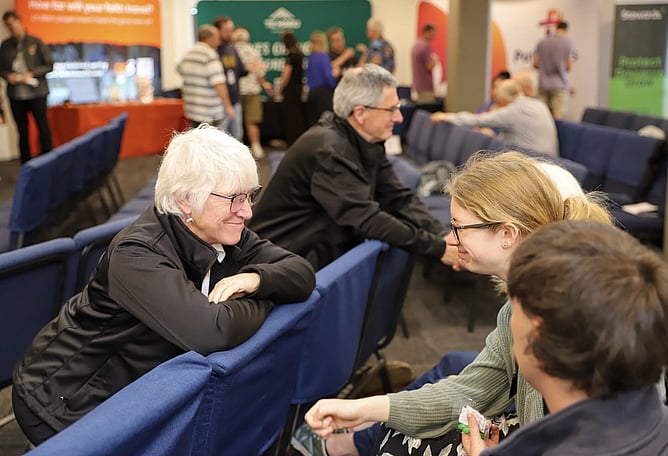
Photo above of Wendy and John at a recent NZ church event
A dream on the fence
None of this was the plan when John and Wendy married. They had simply agreed that if God ever called them to be missionaries, they would explore it. For years, it never came up. John was a University Lecturer and then pastored a church in New Zealand. They raised their family.
Then in 2005, a missionary meeting at their Church, on an ordinary Thursday night, changed the direction of their next twenty years. John came home and announced he knew what to do with his sabbatical: they would go to Southeast Asia. In 2006, they spent a month there, Wendy teaching English while John ran leadership seminars with local pastors.
On their last day, Wendy found herself quietly asking what it would take to live there. Her list was short: a supermarket with the basics, air conditioning, and a balcony where she could grow things.
When they both turned 50, close friends gave them a metal sign with a single word on it: dream. It was meant to go inside the house. They put it on the fence, where they could see it from different rooms, and kept pondering. By 2011, Wendy was running an English language programme for Bible colleges in another part of the country. By 2012, they were seriously planning to go.
They wrote to friends who had known them for decades and asked what they thought. Every reply was positive, even from people who knew they had both faced health concerns. Their church elders and missions committee backed them. Their children, grown and independent, were fine with it.
John still had doubts. "He couldn't see what he had to offer," Wendy says. "Other people around him could see it. But he said, I don't have a Bible college degree. How can I teach in a Bible college?"
No desk, one week's notice
The college they joined trains church leaders at graduate level. It is an unusual college because it is interdenominational and brings together students from many ethnic groups, while most colleges serve one denomination and often one people group.
On arrival, there was no desk and no set role. A week before classes began, John was asked at his first faculty meeting to teach discipleship and spiritual formation. It was a lesson in flexibility. John came to admire how quickly and capably his colleagues could pull things together at short notice.
Trust took time. For about two years, they sensed colleagues and students weighing them up. "It's like, are you guys sticking around?" Wendy says. "Nobody wants to invest in you if you're going to disappear." This is something many Mission Partners observe about their local community.
For John and Wendy, they recognised that their age turned out to be a gift. In a culture that honours elders, grey hair opened doors that if they were there twenty years prior, they may have found those doors closed shut.
Name cards and listening
Lecture-based teaching is common in Bible colleges in the region, as it has long been in many places, including New Zealand. John and Wendy brought a more interactive style, and the students warmed to it. One of John's simplest ideas made a big difference. He had every student write their name on a small card. When he asked a question, the cards were shuffled face down, and someone drew one. Whoever's name came up answered.
"The main benefit was that the teacher didn't pick on anybody," he says. "It was completely random. Everybody got engaged."
They also pushed for mentoring to be something students did, not just something faculty did for them. "If only faculty, do it, people think only faculty can do it," Wendy says. "Anybody can mentor." So third-year students mentored first-years, and faculty mentored the second-years; so everyone both received it and practised it.
After the first year of the mentoring programme, one student's feedback stopped them in their tracks: nobody had ever listened to them before, they said. In close-knit extended families, where needs are many, and resources are stretched, people often learn to be careful about what they share. A mentor who simply listened was something new.
That cohort graduated, went on to mentor others, and has stayed close ever since, still encouraging one another. Over ten years, with around 30 students in each intake, Wendy reckons roughly 300 lives passed through their classrooms. "That's a lot of stories," she says. "And a lot of God working."
One of those stories belongs to a student who struggled with his studies and kept failing. He took a job in the college library just so he could keep attending classes, and eventually he finished. Years later, Wendy walked into a conference for English language teachers and there he was, an English teacher reaching his community for Christ.
Others went home and started things. One graduate opened a school in a very poor area. When officials arrived intending to close the Church attached to it, local people from another faith stepped in: “these people are doing good for our community, you need to leave them alone.” A neighbour of another faith paid for the roof on another school's new toilet block for the same reason. Elsewhere, alumni started a preschool, and when it faced pressure to close, it was the parents who defended it. Their children were thriving at school, they said, and the values being taught matched their own.
Going back
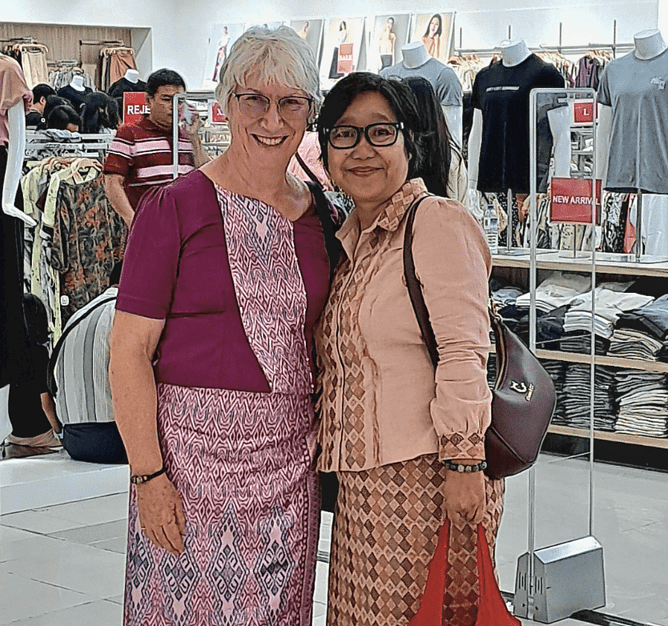
In October 2026, the college celebrated 30 years. John and Wendy had already visited earlier in the year and had decided they couldn't justify the cost of another trip. Then extra invitations started arriving, and they realised that several others from overseas were unable to attend, so they committed and paid for their airfares, which were later covered by some generous givers.
Their trip was at short notice and busy: around eleven meetings in four days. What surprised them was how quickly conversations went deep. Staff they had worked alongside talked openly about what mattered to them. "Our bridges weren't burned," Wendy says. "We're not just people who fulfilled a function." Some senior lecturers are now asking whether John and Wendy could help with course design and teaching practice, on short visits, if possible, rather than another long stay.
Life on life
Asked what made the real difference while working at the College, Wendy doesn't point to a lecture.
At the end of their first academic year, they travelled with their student care group: six hours each way on a bus with wooden seats that couldn't go faster than 70 kilometres an hour, eating what the students ate and resting on a thin mat on a concrete floor. On Teacher Honouring Day, that trip was what the students talked about. "We lived with them," Wendy says. "We didn't have special treatment."
A colleague who shared their office for years said much the same. What he remembered was how they handled disagreement, after meetings and with each other.
"It was the spaces in between," Wendy says. "Talking after class, going to the football. Our students still remember some of what we said. But by and large, it's your life that makes the impact."
One former student put it this way in a message they still treasure: "You are more than teachers to me."
For anyone wondering if it could be them
John calls their years there some of the best of their lives. They also came home changed, living in another culture long enough, John says, teaches you to see your own culture clearly.
Their biggest lesson is that God wasted nothing. "God used all our life experience," Wendy says. "Our health concerns, our backgrounds. Everything was useful."
They believe there's a strong case for going on short or longer mission projects once your children have left home. You are often healthier and freer than people expect, and your age can earn real respect. But they are honest that it isn't a guarantee, and that you still need to fit in and be a blessing where you are.
Their practical advice is simple. Do some intercultural training first; a short course would have helped them. Give yourself time to learn some of the local language before you start teaching. And if you plan to teach English, get trained to do it well.
Most of all, be available. John didn't think he had what it took. Ten years and around 300 students later, the evidence says otherwise.
Please pray with us for the graduates now leading churches and schools across the region, that they would keep listening, mentoring, and serving well. If you're wondering where God might use your own life experience, talk to the GC3 team.
John and Wendy now work part-time with GC3 as Mission Ambassadors, assisting those in and considering going into missions. You can get in touch with them here.
And if you are interested in Southeast Asia short term opportunities yourself, check out this recent article.
