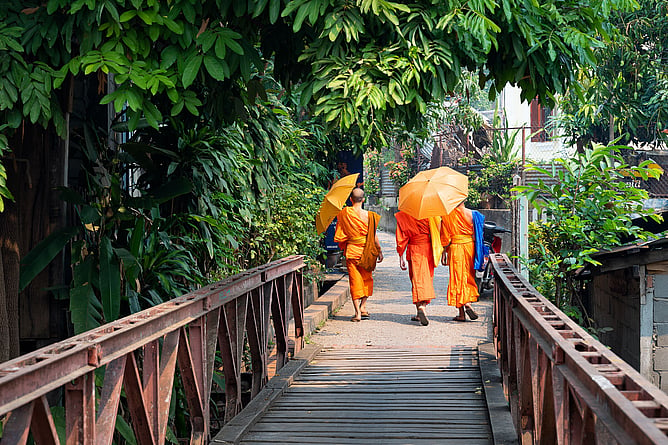
It's 6:30 in the morning in the main city of South East Asia, and the doors of Life Bakery Café are opening. Behind the counter are young tribal men and women who, not long ago, had little formal education and few prospects for work. Now they're learning to bake, manage a kitchen and serve customers, while living and training as part of the Life community.
By late afternoon the focus shifts. Students arrive for evening English classes, from young professionals hoping for better jobs to scholarship students who couldn't otherwise afford to learn. When classes finish, staff and teachers, Lao and foreign, sit down to share a meal together before heading home.
It all started in 2009, when two New Zealanders and two Australians sensed a call to serve the people of southern Laos. They set up "Life” as a business with a kingdom purpose, and it has grown into a language school, vocational training centre, bakery café and guesthouse. Its aim is simple: to bring fullness of life to local people through education, training and community.
Maybe you've just finished school or university. Maybe you're between jobs, or the kids have left home, or you've recently retired and you're wondering what's next. If you've got a season of life with fewer commitments tying you down, it might be exactly the right time to give some of it away, and the Life team is looking for people to join them. They need help across the school, café and guesthouse, and they especially need people who are happy to teach some English as part of their daily routine.
Who can go?
Pretty much anyone with a heart to serve and a willingness to learn. Short terms run from six weeks to a year. Gap year volunteers are welcome, and so are people well past their gap year. The Life team’s own handbook answers the question "What if I'm over 60?" with a simple "just get in touch."
Short termers might come for a specific project, a summer school, specialised training, or simply to be a conversation partner for English and vocational students. You can come on your own or as part of a team. Life likes to have a contact person at home (often your home fellowship) so everyone stays in the loop.
What would I actually do?
Life works with two quite different groups of people. Its English school serves educated young city people who will shape the future of this country. Its vocational training gives rural young people, many of whom have had little or no formal education, the skills to find work and build a different future.
Most volunteers teach some English each day. Classes run Monday to Thursday evenings, and there's a full curriculum with teacher guides and resources, so you won't be starting from scratch. Senior teachers are on hand to support you.
Beyond the classroom, there's a wide range of ways to help. You might work alongside students in the vocational programme, learning together in the bakery or on maintenance and domestic skills. You might help in Life Bakery Café, a well-loved spot in town that's popular with locals, expats and travellers, or in the guesthouse. There's also administration work behind the scenes. Whatever your background, there's likely a place for it, and the Life team is always open to talking about how your gifts could fit.
Outside work hours there are monthly youth nights, an annual four-week youth camp, village visits, Sunday gatherings at local fellowships, and the everyday opportunity to build real friendships with Lao people.
A typical working week is around 24 to 30 hours, including class preparation. Fridays finish with a team lunch and devotional time, and weekends include your own downtime.
Where would I live?
Short term and gap year volunteers may be able to live in homes alongside Lao colleagues. They're modern by Lao standards, with kitchens, Western-style beds and showers, and living with Lao colleagues is one of the best ways to settle in. The Life team can talk you through the practical details, including costs, once you get in touch.
What should I prepare for before I go?
Talk to your doctor at least three months ahead about vaccinations (hepatitis A and B and typhoid are commonly recommended). Decide on travel insurance, and read the fine print, especially around motorbikes. Pack modest clothing: shoulders and knees covered, collared shirts and long trousers for men when teaching, and a traditional skirt called a sinh for women (you can have these made locally). Larger sizes are hard to find in here, so bring your own clothes and shoes.
The country has a conservative culture. Men and women don't usually touch in public, unrelated men and women don't share houses, and alcohol is off limits amongst brothers and sisters.
The part nobody warns you about
Almost everyone who serves cross-culturally hits a wall at some point. The heat, the language, the food, bargaining at the market, missing friends, not being able to get around on your own. This is the "inward challenge," and it's often harder than the work itself.
If that happens to you, it's normal. It doesn't mean you've failed or weren't meant to go. The advice from the Life team is practical: learn some of the language, limit time on social media so you can be present with the people around you, say yes to social invitations, laugh at yourself, keep a mentor close, and be a learner. Ask someone to teach you to cook a local dish or plant rice. And remember why you came.
People who have made the most of their time at Life often say the same thing: after all the effort they put in, they received far more than they gave.
Interested?
Contact GC3 (Admin@gc3.org.nz) and we can put you in touch with the Life team.
