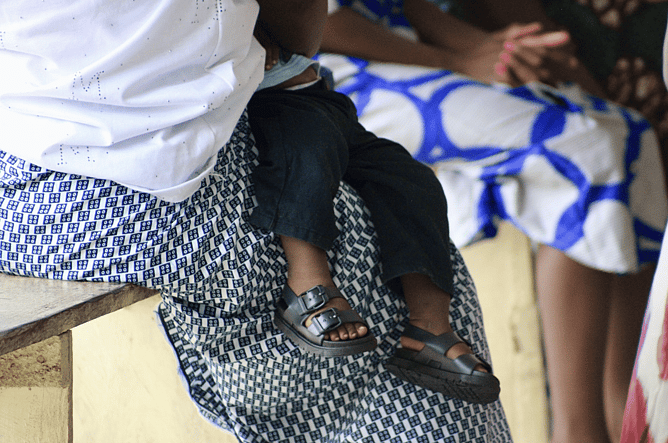
In parts of Liberia, a child born with a disability is not seen as a child in need of care. In some communities, they are seen as cursed, as evidence of a mother's sin, as sadly, something less than human. Families with a child with special needs can find themselves shut out of their own village: barred from the well, turned away from the market, refused treatment at government hospitals. Some children are taken to a witch doctor to find out "what happened." Again very sadly, some do not survive.
This is the reality that our GC3 Mission Partners, Suzie and Darron, live and work alongside every day in Liberia, West Africa.
A country still carrying the weight of its past
Liberia was founded in the 1800s by freed and repatriated American slaves, which is part of why the country has such deep historical ties to the United States. That founding also created lasting tension between different people groups, tension that erupted into a brutal civil war stretching, with breaks, from the 1970s into the early 2000s.
More than twenty years on, the effects are still visible everywhere: in the state of the roads, in the reach of education, in access to medical care. Christianity is the majority faith on paper, but much of it is shaped by prosperity teaching, or blended with older tribal beliefs and practices still active in rural areas. Government hospitals are under resourced, and basic medical knowledge that many of us take for granted, how to safely handle a newborn, how to treat a simple infection, is often missing.
His Safe Haven
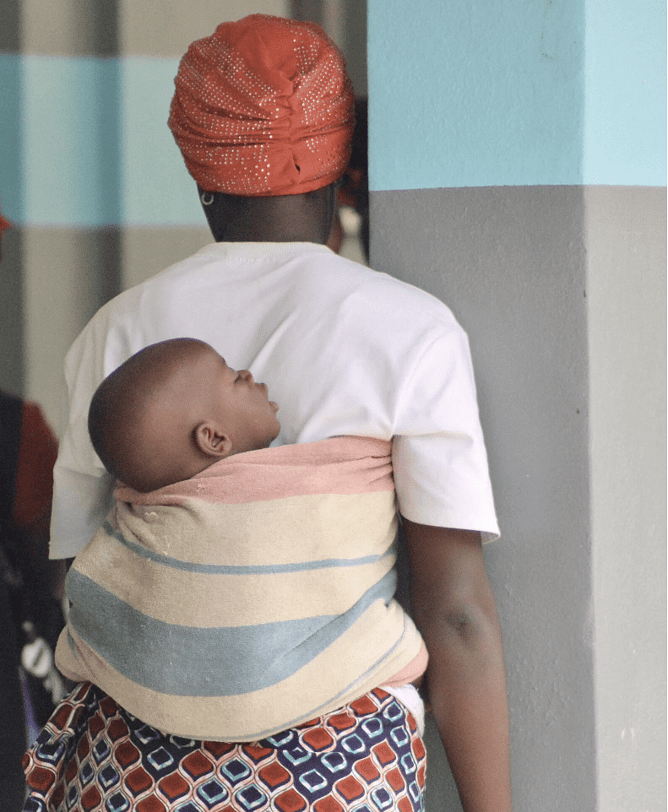
Suzie and Darron work with a mission that runs a pediatric hospital and an orphanage for children with special needs, called His Safe Haven. Unfortunately, without it, many of these children would have nowhere else to go.
Some children arrive after being rescued from harm. Some are simply left at the gate overnight, with no note and no way of knowing their story. The mission takes an unusual approach to care: widows are employed to look after small groups of three or four children each, living together in family style homes, with shared meals, daily therapy, and schooling built into everyday life. This gives the widows meaningful work and income, and gives the children something close to a family.
As Suzie puts it, "God loves these children, no matter how long we have these children, sometimes we only have them a couple of days, sometimes it'll be a couple of months, a couple of years." That conviction shapes everything about how the mission cares for each child who comes through its gates.
An outreach programme now also supports around 104 families who are caring for children with special needs in their own homes rather than surrendering them. A full time nurse visits regularly, and families come in twice a week for therapy and connection with the wider community at the mission.
One recent story, which Suzie shared, stands out. A mother arrived at the hospital intending to hand over her three year old son. Staff spent time with her, gently explaining how precious this child was in God's eyes. Susie recalls that "no one had ever told her that this was a human," and the mother began weeping, hugging her son and pleading, "Please don't take the child, don't take him from me, don't take him." She took him home instead.
A hospital built out of necessity
The hospital itself, Jesus Loves Me Children's Clinic, started small: a two room clinic, built simply because government hospitals would not treat children with special needs. Word spread quickly, and it grew into something far larger, now including screening rooms, a lab, a surgery ward, an OB ward, and a thirty bed inpatient facility.
Darron has been closely involved in this construction work, using both his training as a carpenter and his childhood familiarity with Liberian Pidgin English to bridge the gap between international volunteers and local building crews. He continues to help finish and maintain the hospital buildings, and is now working on accommodation for visiting interns and guests who come to serve alongside the medical team.
Teaching the value of every life
Suzie leads and mentors women's Bible studies, though her role has increasingly shifted from teaching to supporting others who now teach. Several women who came through her original Bible study now run their own groups in their communities, passing on what they have learned.
Much of this teaching involves gently unpacking ideas that many of us would never think to question. Explaining the idea of being "a living sacrifice" once led to real confusion, since the surrounding culture still associates sacrifice, including of children, with something dangerous rather than something good. Conversations like these take patience, and a willingness to build understanding from the ground up.
Women and girls are often undervalued in the wider culture, so part of Susie's work is helping them understand their worth before God, while being careful not to put them at risk when they return home to families who may not share that view.
The cost, and what sustains the work
Life in Liberia carries a heavy emotional weight. Preventable death is common and constant: a child lost to something that would have been treatable with basic medical care, a family member gone within days of falling ill. It is not something that becomes easier with time, but it is met with a steady, tested faith, and a deep trust that God is present even in the hardest losses.
What sustains the work, day to day, is often simple: a baby who weighed two pounds at birth growing strong, a child taking their first steps, a mother choosing to keep her son rather than give him up, a local carpenter growing in skill and confidence and pride in his work. These small, faithful moments are the shape that hope takes in Liberia.
How you can help
Suzie and Darron rely on the prayer and financial support of people back home to continue this work. A trip is planned for later this year, travelling between Liberia, the United States, and New Zealand, and prayer for safe and smooth travel, along with the emotional readjustment that comes each time they leave the country, would be deeply appreciated.
Beyond prayer and giving, they have said that ongoing connection matters more than people might expect: a note, a question, a simple update on life back home. It is a reminder to them that they are not doing this work alone.
If you would like to receive updates from Suzie and Darron, or to support their ministry financially, we would love to connect you with them directly, please check out their Mission Partner profile and get in touch.