By Michael Hanson
Paul, writing his last letter from a Roman prison, names two kinds of people he has known.
"You are aware that all who are in Asia turned away from me... The Lord grant mercy to the household of Onesiphorus, for he often refreshed me and was not ashamed of my chains... he searched for me earnestly and found me." (2 Timothy 1:15-16)
Some deserted him. Others searched him out. The question Paul's own experience puts to every sending church is simple and uncomfortable: when our Mission Partners are far from home, tired, or in trouble, which one will we be?
Sending is only half the task the Great Commission gives the Church. The other half, often quieter, less celebrated, and easier to neglect, is caring well for the people we send. Scripture treats this not as an optional kindness but as an essential part of what it means to do mission together.
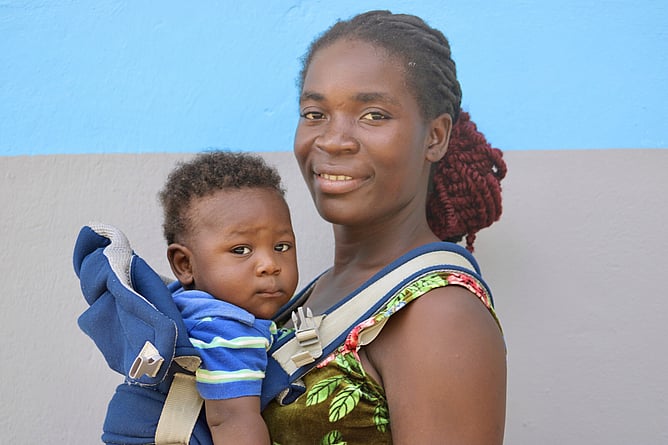
Photo above kindly supplied by Suzie Shank, Mission Partner in Liberia
Mission belongs to the whole Church, and so does Care
The starting conviction behind partnership in mission is that it's a shared calling of the whole Church, not the responsibility of one individual acting alone. God is already at work through churches in every context, and mission flows through relationships marked by trust, mutuality, and shared leadership.
That same conviction applies directly to caring for those called into missions. Clarity about roles matters here: God calls, the local church sends and carries responsibility for their pastoral care and oversight, and for us at GC3, our part is to serve and support that relationship by providing the practical, relational, and structural support that helps a calling become a sustainable, well-supervised placement. Care for a Mission Partner is never someone else's job to pick up later. It belongs, from the outset, to the church and the community that sent them.
This is why "caring for our own" is the right phrase. A Mission Partner does not stop belonging to their sending church the moment they leave the airport. They remain "our own," a member of the body, still to be loved as such, however far away they serve.
The Biblical Pattern: What Paul asked for, and was given
Scripture does not leave us to guess what care for a Mission Partner looks like. Paul's own letters are, among other things, a record of what he needed and what he was grateful for.
Prayer. Paul asks the Ephesian church to keep alert, "with all perseverance, making supplication for all the saints, and also for me" (Ephesians 6:18-19). He does not ask for prayer about surface things: he asks for prayer that he would speak the gospel boldly, as he ought to speak it. Prayer covering was, for Paul, not a formality but a lifeline.
Practical and logistical support. From prison, Paul writes: "When you come, bring the cloak that I left at Troas... also the books, and above all the parchments" (2 Timothy 4:13). Even an apostle needed someone to think about his coat and his books. Care for Mission Partners includes unglamorous, physical logistics, the "bits and pieces" of a life lived far from the systems that usually support it.
Fellowship. In Acts, Paul and Barnabas return from their first missionary journey and gather the church together, "and declared all that God had done with them" (Acts 14:24-28). They stayed there "no little time" with the disciples. Coming home was itself treated as significant, a time for the sending community to listen, celebrate, and reintegrate, not simply a return to normal life with no acknowledgment of what had happened in between.
Relationship. Paul commends Phoebe to the Roman church, asking them to welcome her and help her, "for she has been a benefactor of many people, including me" (Romans 16:1-5). Relationships of mutual honour and communication, knowing a person by name, speaking well of them, helping them, run through Paul's letters as a matter of course.
Partnership. To the Philippians, the church that supported him more consistently than any other, Paul writes with evident affection: "You Philippians yourselves know that in the beginning of the gospel, when I departed from Macedonia, no church entered into partnership with me in giving and receiving, except you only" (Philippians 4:10-15). Financial partnership, for Paul, was never merely transactional. It was fellowship: a shared participation in the gospel that bound sender and sent together.
Taken together, these passages describe something closer to a whole-life relationship than a support arrangement. Spiritual covering, physical provision, moral encouragement, and the honour of being known and welcomed home: this is the biblical shape of caring for our own.
A Holistic Framework: Caring for the whole Person
Because Scripture treats Mission Partners as whole people, not simply as "workers" to be resourced, care needs to be holistic. A helpful way to hold this together is to ask how we are caring for someone spiritually, mentally and emotionally, physically, and relationally.
One framework I've found helpful here comes from outside the mission world: Te Whare Tapa Whā, Sir Mason Durie's Māori model of health and wellbeing. It pictures wellbeing as a house held up by four walls, and if one wall is weak, the whole house is unstable.
(Adapted from Te Whare Tapa Whā, Mental Health Foundation)

From a Christian perspective, I think it's worth grounding each of those four walls in Scripture, rather than leaving them as an abstract idea:
Spiritual care is foundational, following the pattern of Ephesians 6:18-19: sustained, specific prayer, and pastoral care that keeps a Mission Partner's relationship with God central, not assumed.
Mental and emotional care follows the example of Romans 16:1-5: field visits, honest counsel, and the simple ministry of "being there." Cross-cultural life is stressful in ways that are often invisible from a distance; a church that only asks "how's the ministry going?" may never hear about the marriage under strain or the discouragement building underneath.
Physical care answers Paul's own requests in 2 Timothy 4:13 and Philippians 4:10-15: finance, home assignment, re-entry support, care packages, and the practical logistics that keep a life functioning across two countries and cultures.
Family and social care recognises that a Mission Partner rarely serves alone. Children, marriages, and the ordinary rhythms of communication (a letter, a gift, a message that says "we haven't forgotten you") all need deliberate attention, especially around the disorientation of re-entry.
Care has seasons
Just as Paul's needs changed across his ministry, from active proclamation, to imprisonment, to preparing for death, a Mission Partner's needs shift through recognisable seasons: preparation for the field, the disorientating first year, honeymoon and culture stress, periods of discouragement or crisis, home assignment, and the sometimes-harder culture stress in reverse on return, before full integration.
A church that only knows how to send someone off well, but has no plan for the discouragement of year two or the disappointment of ministry or the disorientation of coming home, has only done half the work. Caring well means asking not just what kind of support is needed, but when: anticipating crisis points rather than only responding once they arrive.
Questions worth asking
Paul's confidence that Onesiphorus, and not the deserters of Asia, would be remembered by the Lord (2 Timothy 1:16-18) is a quiet challenge to every sending church. It is worth asking honestly:
Do our Mission Partners perceive us as a genuinely safe place to be honest about their struggles? Is there someone they could call in confidence?
Do we regularly ask about their walk with God, their marriage, their family, and their relationships with co-workers, before those things become a crisis rather than after?
Is there a budget line, known to our Mission Partners, that could help them access care and support if needed?
Are we prepared for the seasons ahead (transition, crisis, re-entry), or only for the sending?
Encouragers, not deserters
Caring for our own is not a peripheral task bolted onto the "real" work of sending. It is what faithfulness to the people we send actually looks like: spiritual, emotional, physical, and relational; sustained across every season of their service; carried not by one person but by a whole community around them. The Great Commission sends workers into the harvest. Caring for our own is how the Church makes sure that when they are weary, or in chains of one kind or another, someone comes searching.
The question Paul's life puts to us remains: who will we be, the ones who turned away, or the one who searched until he was found?
If you'd like to talk through what care could look like for your Mission Partners, get in touch with the GC3 team. We'd love to discuss ways to make this work for your Mission Partners and You.