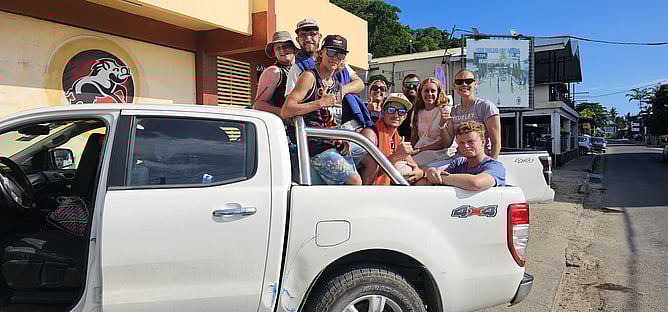
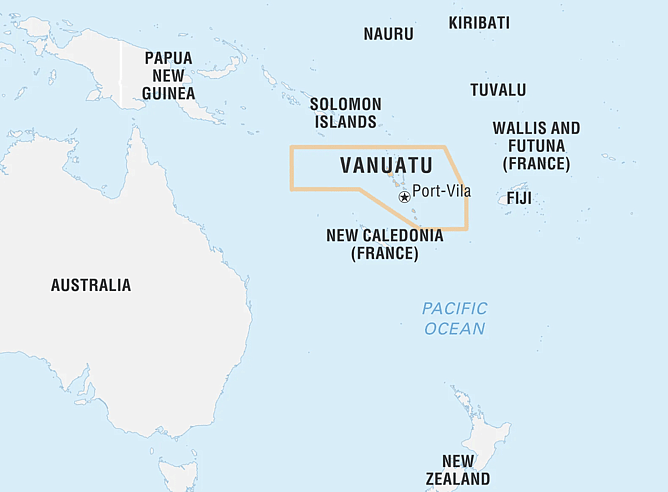
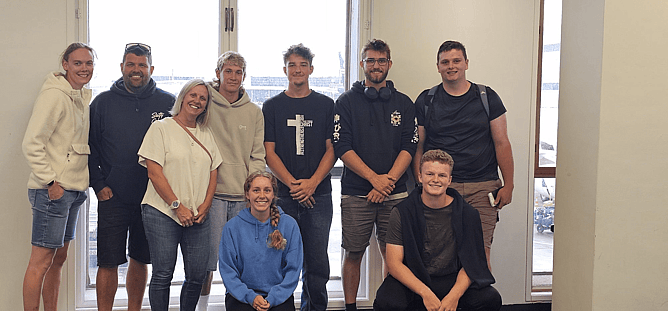
Earlier this year, Marina Shannon and a team from Orewa Community Church travelled to Vanuatu to run the children’s and teens’ programme at the SIL Bible Translators annual conference.
For SIL families serving across remote and scattered islands, this gathering is one of the few guaranteed times each year for them to gather together. For their children, it provides rare peer connection and focused learning within a community that understands their context. Of course, for the SIL Missionaries, having an organised children’s programme while they met was a huge blessing.
Marina, who works with youth, young adults and emerging leaders at OCC, understandably invested significant time in prayer and preparation so the trip would be well received by the SIL team and those going on the mission project.
She invited trusted adults and young people who had already demonstrated local leadership to join the short-term mission team. She knew that the composition of the team, and everyone's ability to adapt and be flexible was really important.
As she reflected, “I knew that we’d need to be flexible… I needed people that trusted me, because I knew that there would be this element of, ‘Oh, this isn’t what we thought it was going to be like."
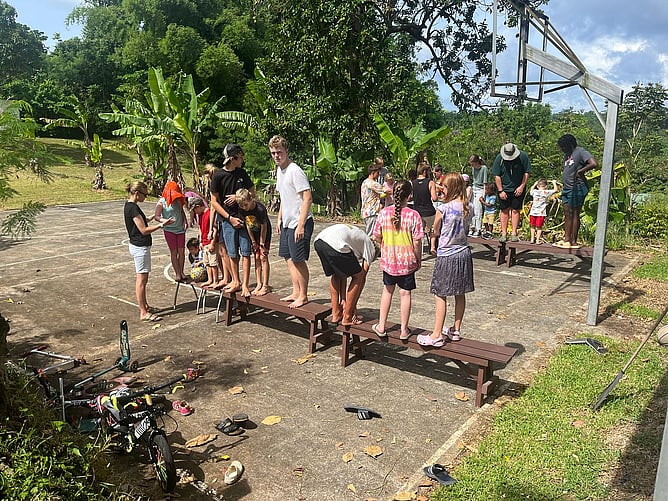
The team arrived with a programme that had been worked well in the New Zealand environment: semi-structured discussions, reflective worksheets, songs on slides, and interactive teaching. Once in Vanuatu, however, it became clear that the educational experiences of many of the missionary children were shaped by the practical realities of remote island life. The children weren’t used to learning in larger groups, so comprehension and engagement naturally was different.
“It wasn’t that the content was wrong,” Marina explains, “it was that the way we delivered it didn’t fit their context.” The message remained, however the method needed to change.
The Mission Team debriefs needed to shift to be part planning sessions. Worksheets gave way to games, and structured studies became storytelling sessions. Teaching new songs was replaced with repeating simpler, more familiar ones. “Pivoting became normal” Marina says.
For the team, it was a practical lesson in beginning to understand cultural awareness. We're aware that short-term mission isn't about exporting familiar systems unchanged, however you often don’t realise what cultural norms you are exporting until you are away from home. Culture awareness requires listening, adjusting, and serving in ways that genuinely meet people where they are. It's often noted that your well intended agenda may need to be held very lightly.
For the OCC team, the adjustments were not only logistical, they were personal. The heat was intense, water was limited and facilities were basic. What felt challenging to the visiting team was described by the missionary families as "conference luxury". When the team heard this perspective they felt the need to be quietly grateful rather than complain.
“These amazing people really believe in serving in this way by putting themselves in situations that to many Kiwis is uncomfortable, we wanted honour that by serving them as well as we possibly could.”
Resilience also grew. There were difficult days marked by heat and physical exhaustion, cultural misunderstandings, and occasional miscommunications. Marina admits, “Leading a team in an environment where I was just as uncomfortable as they were was really stretching for me”.
Evening debriefs, shared worship, and honest conversation became essential to keep the team functioning and serving well. Everyone learned to rely on God in new ways.
For the missionary children, it seemed that the presence of young believers from Orewa Community Church carried its own significance. Many have limited opportunities to interact with peers who share their faith and church experience. As Marina once again reflected, “To see young people from New Zealand who are so excited about sharing about Jesus… that seemed to speak volumes to the local teens and kids.”
For Orewa Community Church this trip sits within the broader leadership development vision. Through local service, responsibility, and intentional formation, young adults are gradually prepared for opportunities that stretch them further. Short-term mission projects become a natural extension of that pathway, not a stand-alone event but part of an ongoing faith journey.
So, was it helpful in developing their leaders while aiming to serve others?
Marina commented that every single person grew in confidence. Several had a shift in perspective about what’s materially important and what isn’t.
And is a short-term mission project something every church should consider?
Marina’s response was both measured and insightful:
Do not be afraid to go.
Go prepared to learn.
Choose adaptable people.
Prepare well but hold plans very lightly.
Expect differences.
Be ready to learn as much as you teach.
And, care well for your team, recognising that leadership development is often happening quietly alongside the visible work.
We acknowledge that short-term mission projects do not replace the steady, long-term faithfulness of those serving cross-culturally. But when approached with a desire to learn, partner and be flexible, it can strengthen both those who go and those who host.
As Marina and her team discovered, some of the most significant lessons learnt happened not when everything ran smoothly, however by wanting to serve well they learned to rely more deeply on God and one another.
Thanks to Marina and Orewa Community Church for sharing these helpful short-term mission project insights. To learn more about Missions and how we can work with your Church, visit our "How we can help" page.